

Fawlty Towers
John Cleese’s Fawlty Towers, The Play
A joyful stroll through timeless British comedy
From the outset, I’d like to draw your attention to the spelling of Fawlty, a detail worth noting as other productions currently touring use variations of the name. Perhaps that’s why this one proudly bears the title John Cleese’s Fawlty Towers.

Based on the iconic television series, the play feels rather like watching a compilation of the show’s “greatest bits.” Anyone familiar with the original episodes will instantly recognise many of the classic moments; from the hotel inspector’s visit and the misplaced gambling money to the infamous moose’s head fiasco. It’s a nostalgic joyride through some of the show’s most beloved scenes.
What’s especially heart-warming is seeing families in the audience, with younger generations laughing just as loudly as their parents. It’s a lovely thing for a comedy of this vintage to bridge generations so effortlessly together. At one point, when Basil turned red in the face trying to open a stubborn wine bottle, the children in the two rows in front, were in absolute hysterics. It’s proof, if ever we needed it, that Fawlty Towers remains timeless in its appeal.

As you enter the theatre, the set (Set and Costume Design Liz Ascroft) immediately immerses you in the world of the hotel: complete with reception desk, dining area, and even stairs leading to a guest room. A curious addition, however, is a set of studio-style lights hanging overhead, as though hinting that we’re watching a live recording of the television show. It’s a subtle but interesting touch, distinguishing this production only slightly from a conventional stage play.
No one can deny how iconic Manuel is as a character, and Hemi Yeroham captures him wonderfully. His physical comedy and expressions are spot-on. Although we don’t get the full emotional range (the famous missing rat doesn’t make an appearance), Yeroham still brings great warmth and charm to the role. It’s also pleasing to see that the production remains faithful to the original format, keeping Basil at the centre of the chaos, with Manuel as an ever-exasperated sidekick.
The play opens, fittingly, with Sybil (Mia Austen) on the phone and within seconds, I was transported straight back to the 1970s series. Austen perfectly channels the clipped tones and shrill laugh of Prunella Scales’ original performance. It’s uncanny, and a delight to watch.
Basil, played here by Danny Bayne, brings something slightly different to the role. Bayne infuses Basil with a touch more charm and charisma than we might expect. It’s a smart choice, the snide remarks are still there (“dragon lady,” “nest of vipers,” and so on), but his Basil feels a little less beaten down from the start. Inevitably, each actor must make the role their own, and Bayne succeeds admirably. He retains the character’s trademark gangly movements, his awkward height advantage over everyone else, and of course, the unmistakable “funny walk” that fans will expect.
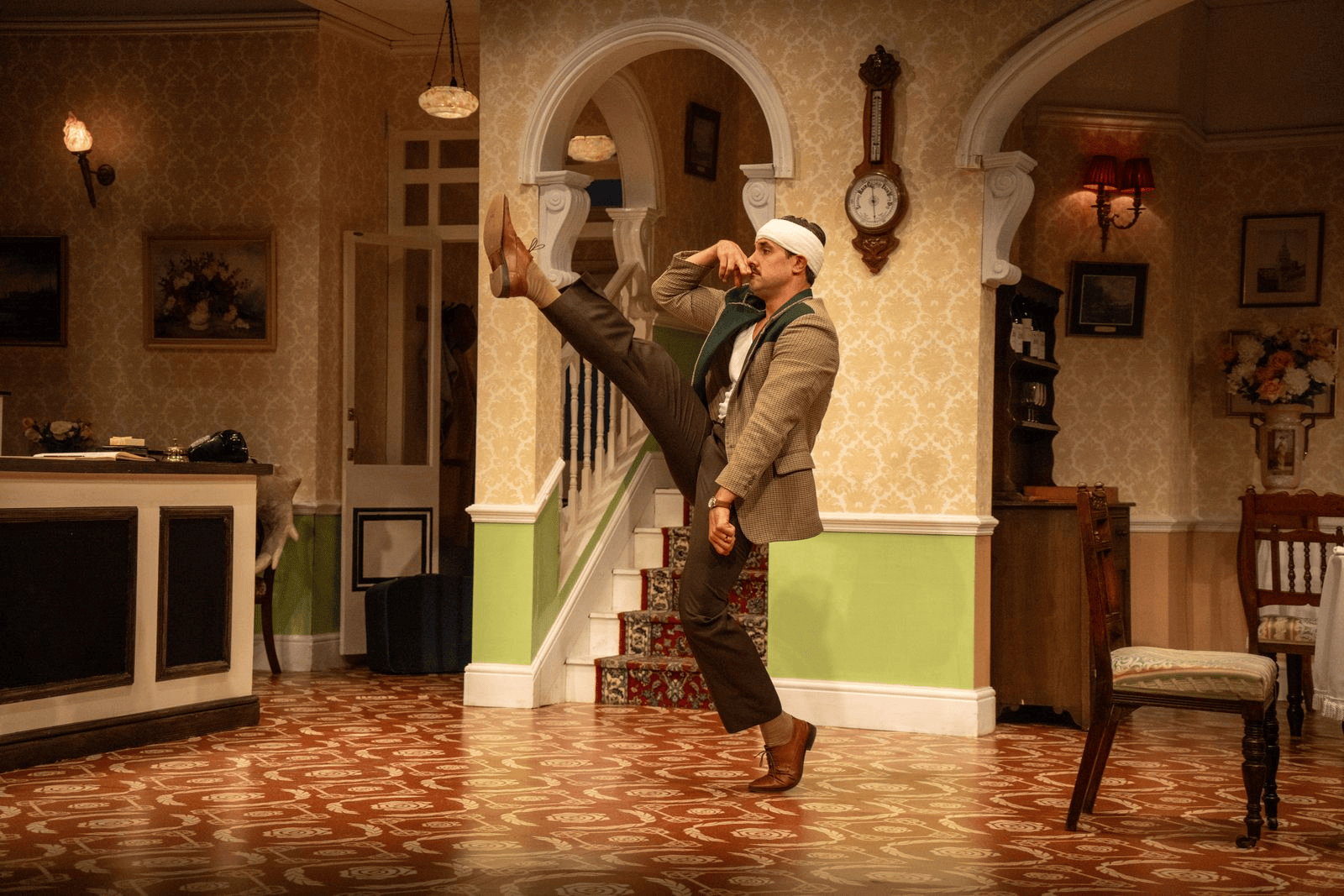
To describe much more would risk giving away the best moments, as so many of the jokes and storylines are lifted directly from the original. Suffice it to say, every minute of this play is packed with laughter, whether you’re reliving the television memories or experiencing the farce for the first time.
All the favourite characters make an appearance. Paul Nicholas is superb as the Major, providing a wonderfully befuddled presence. A small word of warning, there’s a gunshot during one of his scenes, but it’s met with laughter and fondness rather than shock. The audience’s spontaneous reaction to each character’s entrance, whether warm or wary, shows just how deeply these personalities are embedded in British culture.

Old or new, this is timeless comedy at its finest. Faithful, funny, and fabulously nostalgic. John Cleese’s Fawlty Towers proves that great British humour truly never goes out of style. I highly recommend seeing it wherever you can.

Photo Credit: Hugo Glendinning
You must be logged in to post a comment.